Within the high-stakes realm of modern pro-level sliding, success is no longer exclusively a result of brute horsepower or behind-the-wheel courage. Conversely, it has become a complex science that requires a painstaking fusion of picking a inherently capable chassis, equipping it with the correct performance parts, and, most essentially, understanding its real-time characteristics on the track through sophisticated vehicle dynamics analysis tools. This definitive guide functions as your roadmap from the very first concept of a drift build right through to the last telemetry-optimized refinements that transform a strong machine into a consistent champion. We will delve deep into the art and science of chassis dynamics adjustment, showing how a state-of-the-art suspension tuning tool like GripDial eradicates guesswork and provides unmatched clarity into your vehicle's true dynamics.
The cornerstone of any great drift car is, undoubtedly, the platform itself. Certain vehicles have achieved legendary status within the global drifting community due to their natural handling characteristics, robust build quality, and the vast range of performance components available. Selecting the optimal car is the first and most significant decision a enthusiast will make. To illustrate, the the E36 generation BMW is widely regarded as among the greatest overall drift platforms of the modern era. Its near-perfect 50/50 weight distribution, coupled with a driven rear axle configuration and extremely reliable inline-six motors, establishes a chassis that is simultaneously accessible for newcomers and extremely effective in the possession of a expert competitor. The successor of this lineage, the BMW E46 platform, refines these attributes with a more developed frame, broader track for greater stability, and even increased lock straight from the OEM. A different formidable platform in the professional scene is the C6 generation Corvette.
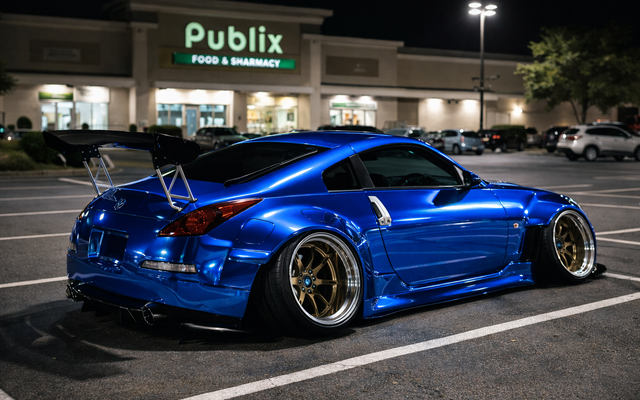
This American track weapon brings a distinctive set of benefits to the drifting sport, including a low-mass aluminum structure, a rear-mounted gearbox and differential unit that aids in an excellent weight distribution, and the immense thrust of a big LS V8 motor. This combination renders it an complete monster on track, able of entering and holding continuous drifts with apparently minimal use of power. For drivers seeking exceptional performance per dollar, the Nissan Z33 excels as a excellent candidate. It comes from the factory with a robust body structure, a effective original locking differential, and the smooth V6 powerplant that offers plenty of performance for learning and moving up in the activity. Its successor, the Nissan Z34, presents further refinements in body strength, steering geometry, and peak motor performance, solidifying its status as a popular choice among professional competitors. Further legendary cars that warrant consideration are the lightweight rotary-powered Mazda FC RX-7, the ever-present Nissan S13, the American Ford Mustang SN95, the electronic-equipped E90 3 Series, and the small yet unbelievably fun and teachable MX-5 Miata. All of these platforms gives a different palette of traits, challenges, and potentials, but they all have in common the basic ingredients required to become a capable drift machine.
However, selecting the right chassis is merely the beginning. To access the complete performance of every of these cars, substantial modifications to the steering and suspension systems are utterly essential. This is where the world of specialist tuning components comes into vital view. The one most transformative upgrade for a purpose-built drift machine is the fitting of a high-performance angle modification kit. These engineered systems, like those engineered by industry leaders like specialist manufacturers, are engineered to radically expand the car's maximum lock-to-lock rotation. A factory production vehicle is severely constrained in how far its steering tires can turn, a design limitation for daily driving. In drifting, however, aggressive opposite lock is constantly needed to control and maintain a angle. An modification kit exchanges the stock hubs, rod ends, and often suspension arms with components that permit the front tires to attain degrees of turn in excess of 70 or even 80 degs, compared to a average factory angle of around 40 to 50 degs.
This immensely increased steering angle offers the pilot with exponentially enhanced command during a angle, allowing it to be much more straightforward to start a slide, maintain it through a long corner, and change fluidly from one angle to another. The contrast in drivability is truly revolutionary. Coupled with a properly chosen modification is the equally essential enhancement to the vehicle's damping system. Generic or even premium sport adjustable suspension are simply not engineered for the unique and harsh requirements of competitive oversteer. A dedicated pair of suspension units is of utmost importance. These specialized dampers have custom valving and spring stiffness that are tuned for the extreme weight transfer that is characteristic of sliding. When a pilot starts a slide, the chassis's inertia is shifted violently to the outside of the corner. Proper competition suspension handle this shift in a controllable fashion, permitting the vehicle to find its balance promptly and offering the operator accurate response through the controls and seat. They additionally allow for accurate adjustment of ride height, damping firmness, and cross-weight, which are all key aspects of dialing in the car's behavior to a particular circuit or piloting technique. In combination, a top-tier steering angle kit and a expertly specified pair of performance suspension units are the core hardware base upon which all future optimization is constructed.
Once the core hardware is installed, the next critical step in the development is the detailed setting of the car's suspension geometry. This is the realm of car suspension tuning, a methodology that can appear daunting to the beginner but is, in practice, the secret to transforming a collection of capable components into a cohesive and controllable vehicle. The most discussed parameter of tuning for oversteer is certainly camber. Wheel camber is the tilt of the wheel compared to the vertical line when observed from the front of the car. When the top edge of the tire is tilted towards the chassis, this is known as negative camber. In drifting, negative camber on the steering wheels is universally applied and is considered critical. The reason is deeply tied to physics.
When a vehicle is going around a bend at high slip angles, the chassis leans toward the outer of the turn. This lean makes the outside steering tire to lose its best contact patch with the tarmac. By applying inward lean, the wheel is pre-angled to compensate for this tilt. As the chassis leans into the turn, the outside front tire flattens out against coilover setup tips the asphalt, increasing its grip at the exact point when it is absolutely essential for steering authority. Typically, front axle camber settings for a competition drift machine vary from approximately -3 degrees to as high as -5 degrees or even greater, contingent on the parameters of the chassis configuration, compound choice, and operator preference. The rear axle wheels also use inward lean, but the settings are generally more conservative and more nuanced than the front axle. Too much camber at the rear can result in the chassis excessively prone to oversteer and difficult to manage on throttle input, as it reduces the effective contact patch of the powered tires during linear power delivery. Therefore, rear camber settings are frequently in the vicinity of -1 degree to -3 degrees, striking a delicate balance between providing enough cornering grip to assist in initiating and holding the drift while still keeping usable hook-up for exiting the corner. camber angle is merely one component of the broader tuning puzzle, which furthermore involves toe angle, self-centering steering, and bump steer correction.
Toe setting describes the direction drift suspension tuning guide of the tires when viewed from the top. Toe-in means the leading edges of the wheels are nearer together than the trailing edges, while outward toe means the opposite. For oversteer, a modest amount of front negative toe is frequently used to quicken the initial response handling response, making the car feel more responsive and willing to begin a drift. Rear toe angle is typically set to neutral or a extremely minute amount of inward toe to promote straight-line stability under throttle. Caster is the forward or backwards inclination of the kingpin axis when observed from the side of the car. Positive caster angle improves self-centering and stability stability, and it additionally adds to inward lean effect during turning, which is extremely advantageous. Setting these values is a complex interaction where a adjustment to a single setting can and will affect the other settings. The traditional method for dialing in a car's suspension geometry for drifting has historically been a time-consuming affair of guesswork and adjustment. A pilot or engineering group would introduce a adjustment based on a hunch, test the chassis on track, rely on the operator's subjective sensation and impressions, and then apply an additional adjustment. This process would iterate time after time until the vehicle felt "good" or the scheduled practice session was exhausted. This methodology is not just extremely inefficient in terms of time and costs, but it is additionally inherently imprecise.
Pilot feel is a infamously unreliable metric, influenced by countless variables such as fatigue, varying track conditions, temperature, and merely the mood of the operator on that particular session. What feels "tail-happy" on one lap might feel "tight" on the next pass, resulting in confusing information and frustrating changes. This traditional challenge in chassis setup is precisely where contemporary technology has intervened to revolutionize the methodology.
The rise and integration of sophisticated suspension tuning applications has ushered in a new age for tuning and perfecting high-performance drift cars. This new generation of systems, exemplified by cutting-edge solutions like data acquisition tools, work by actively recording the real-time physical performance of the vehicle as it is being driven on the circuit. Unlike using personal feel, these systems gather measurable data on essential variables such as damper compression and extension, wheel speed, lateral and longitudinal g-forces, wheel angle, and accelerator and brake pedal position. This raw telemetry is then analyzed by advanced software that can graph and analyze the information in a actionable way. For the first time ever, tuners and builders can visualize specifically what the vehicle is performing at every millisecond of a lap. car suspension tuning This function changes the entire chassis setup procedure. Consider the specific goal of optimizing the front axle camber for a given vehicle. As an alternative to making a adjustment from -3 degrees to -3.5 degrees and then driving many passes to try and "sense" a change, a vehicle dynamics tool can deliver real-time and clear data. The tool can indicate graphically how the wheel's grip is performing during the critical phases of a angle: the initial flick, mid-corner, and switch. It can demonstrate if the present camber setting is allowing the loaded tire to keep optimal grip or if the tire is over-stressed on its outer edge.
The system can after analysis make empirical recommendations for change. Perhaps the information indicates that the outside front tire is still overloading its outer shoulder at -3.5 degrees of camber, suggesting that a move towards inward lean, say -4 degrees, might be warranted. On the other hand, the data might reveal that the tire is failing to reaching heat or that the inside shoulder is degrading excessively, which could point to that there is too much angle and a small lessening back to -3.2 degrees would be better efficient. This degree of granularity and useful analysis was simply impossible in the era of exclusively mechanical adjustment.
The impact of using a advanced vehicle dynamics tool goes far beyond just setting camber. It serves as an essential suspension tuning guide that is specific to your exact vehicle. When setting the damping settings on your suspension, rather than relying on imprecise guidelines or copying another car's numbers, you can use the telemetry to analyze how the vehicle is reacting in response to your tweaks. The tool can show the wheel movement data over a lap, showing if the shocks are controlling the chassis motion properly or if they are causing the car to bounce uncontrollably after a transition. It can aid in diagnosing issues like excessive compression or topping out, enabling you to apply educated choices to helper springs, rebound/compression values, or ride height. This process applies equally to the complex task of suspension geometry optimization. Beyond camber, the tool can give data into how adjustments to toe and caster are impacting the car's balance during various maneuvers of a drift. For example, it can help you to determine the best amount of front axle negative toe for your individual angle kit configuration and piloting technique by analyzing the speed of initial response and the predictability of the vehicle at lock lock. This transforms the software an exceptionally useful vehicle dynamics manual that is dynamically calibrated by the actual dynamics of your own car on the circuit. It elevates the complete process from a subjective skill into a repeatable optimization exercise.
Furthermore, the value of a platform like GripDial is in no way restricted to experienced tuners with extensive budgets. For the grassroots competitor, it acts as an amazing force multiplier. It effectively provides the tuner with the knowledge of a expert suspension specialist without the corresponding overhead. It drastically shortens the tuning process by providing unambiguous directions to challenges that would normally take countless track days of experimentation to understand. A builder can understand how their individual chassis reacts to specific settings, gaining a deeper understanding of car control in the endeavor. It furthermore makes accessible professional performance tuning techniques, permitting all drivers with the ambition to refine their car to do so in a efficient and productive manner. This is particularly significant in a discipline like sliding, where tuning knowledge has historically been a highly secretive asset among elite teams. Today, that capability can be in the garage of every serious builder.
In summary, the journey to building and optimizing the ultimate high-performance drift car is a comprehensive endeavor that seamlessly blends time-honored mechanical wisdom with 21st-century digital solutions. It begins with the strategic pick of a proven platform, then built upon the installation of essential performance hardware like maximum-angle drift angle kits and correctly selected competition coilovers. The journey then moves into the detailed realm of alignment optimization, where settings like negative camber, toe setting, and caster angle are meticulously adjusted to match the vehicle's new capabilities and the pilot's individual technique. Ultimately, and what genuinely distinguishes the contemporary methodology from the old ways, is the integration of a sophisticated vehicle dynamics tool. This system removes the guesswork and waste of solely subjective tuning by providing empirical, live telemetry on how the car is actually performing. It functions as an unparalleled diagnostic aid, a comprehensive drift suspension tuning guide, and a master vehicle dynamics tool. As a complete package, this integrated philosophy guarantees that every element of the drift car—from the pick of the chassis to the most minute click on the suspension—is optimized for peak performance on the circuit. It embodies the total maturation of the art of drifting, merging mechanical car control with data-informed suspension engineering to build the perfect effective machines imaginable.